
Carnival in Munich 2025: City events and street carnival canceled
One day after canceling the carnival parade of the Damische Ritter, the state capital has also canceled Carnival Thursday (February 27) and the Market Women's Dance (March 4) at Viktualienmarkt. The street carnival “München narrisch” (March 2 to 4) in the pedestrian zone of the old town will also not take place this year. This is due to the attack in Munich on February 13, which claimed two lives.

More actions
March 4: Dance of the market women at the Viktualienmarkt 2025

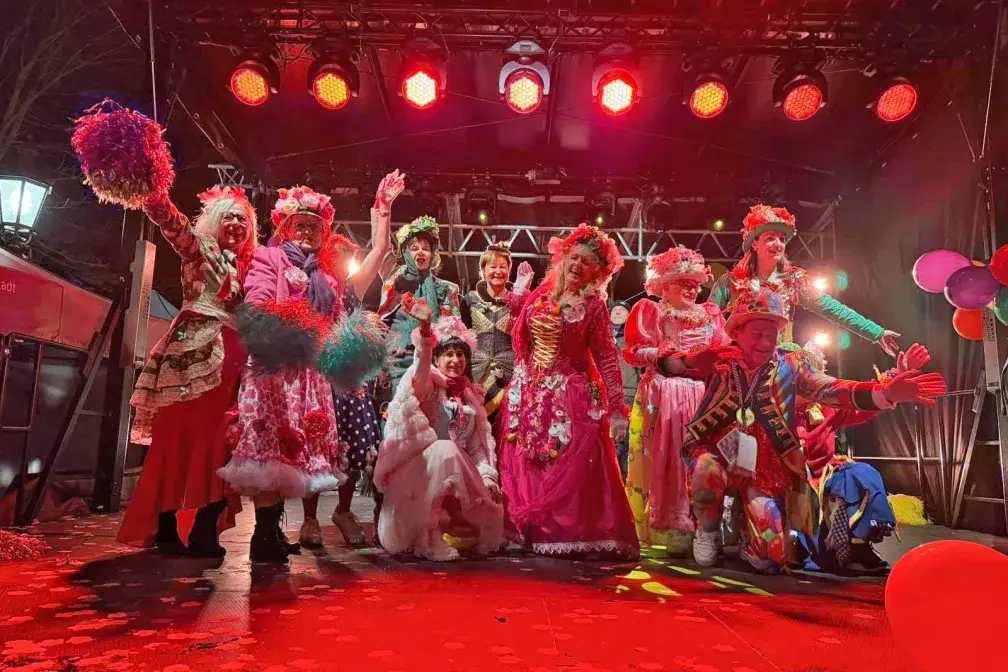
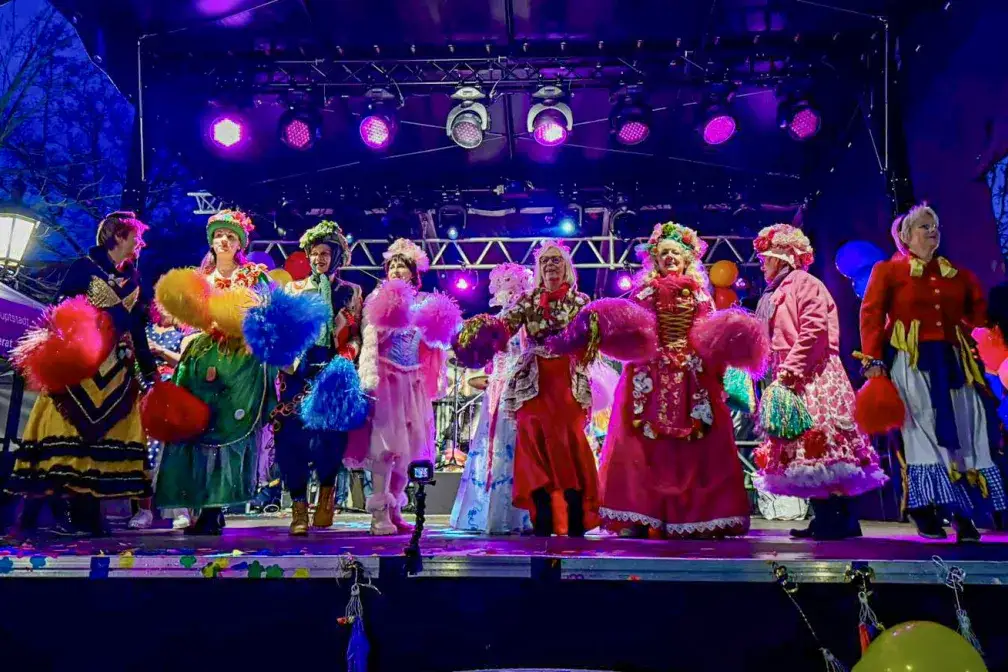
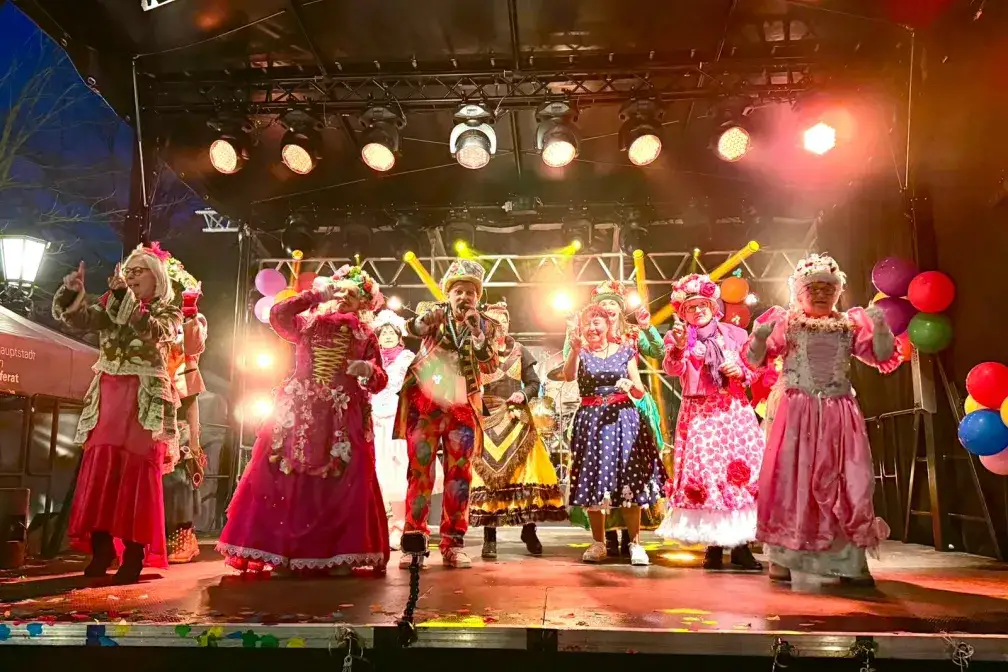
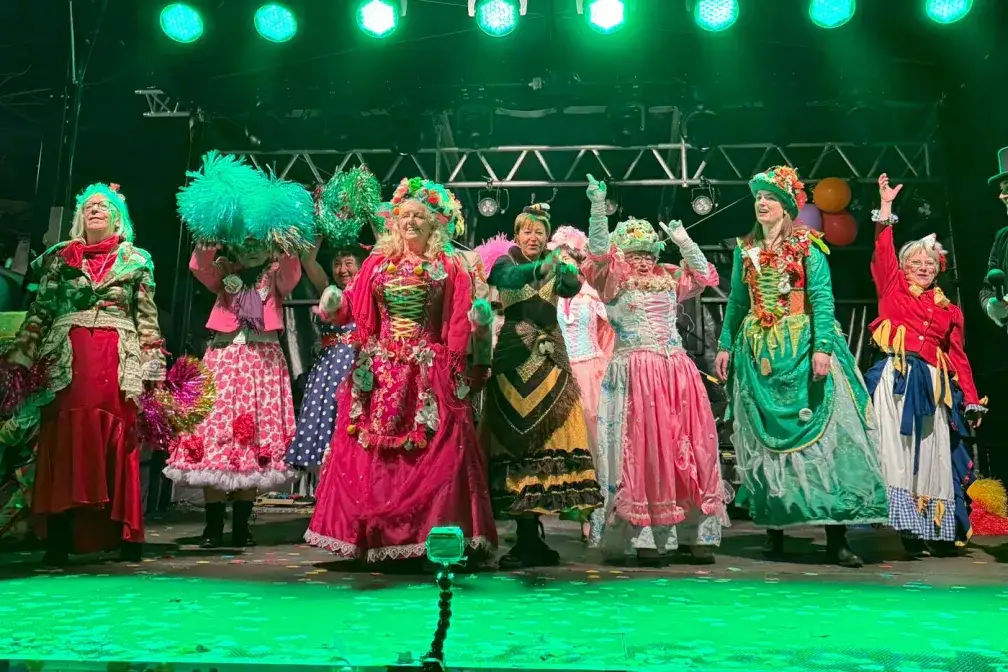
The market women's dance on Shrove Tuesday, March 4, 2025, is the highlight of Munich's carnival. The market women whirl across the stage at the Viktualienmarkt in their colorful costumes. Traditionally, the market women start their program at around 11 a.m. with the classic song "Linie 8" by Weiß Ferdl, followed by new dances that have been rehearsed for several months. The self-made dresses represent the stall: they are decorated in such a way that you can tell who is selling what at the market - whether baker, butcher or florist. After the dance, there is music and good cheer at the stalls on the Viktualienmarkt into the evening.
Die Highlights vom Tanz der Marktweiber

Externer Beitrag
March 2 to March 4: München narrisch - the big party in the city center 2025

"München narrisch" (=crazy Munich) is the name of the street carnival from Sunday, March 2 to Shrove Tuesday (March 4) in the pedestrian zone of the old town. The pedestrian zone is colorfully decorated, from Stachus to Marienplatz to Viktualienmarkt, there is a lively atmosphere every day with lots of creative costumes! On the two open-air stages on Marienplatz, live music, guard dances and activities will keep the revellers in a good mood.
Schäfflertanz in der Faschingszeit

In dieser Faschingssaison wurden die Närrinnen und Narren unterstützt: Nach sieben Jahren erfüllten die Münchner Schäffler wieder ihr historisches Gelübde aus Dankbarkeit über das Ende einer Pestepidemie vor über 500 Jahren. Doch auch ihre Saison ging zu Ende: Bis zum Faschingsdienstag tanzten sie auf öffentlichen Plätzen und kehren erst 2033 wieder zurück.
Münchner Wirtshausfasching
Im Münchner Fasching verlagert sich das närrische Treiben vor allem ab dem Unsinnigen Donnerstag oft in die Wirtshäuser der Innenstadt, z.B. beim Schlagerfasching der Narrhalla. Neu war 2026 der sogenannte Weißwurstkrapfen, eine Kombination aus einem Weißwurst-Patty und Krapfenteig, ergänzt durch eine Senfmischung mit süßer und scharfer Note. Angeboten wurde diese Neuheit am Faschingsdienstag bei teilnehmenden Betrieben der Münchner Innenstadtwirte. Am Rosenmontag wurden dort traditionell Weißwürste für 1 Euro bis zum Mittagsläuten verkauft.
Geldbeutelwaschen am Aschermittwoch

Ein alter Brauch zum Ende des Faschings und dem Beginn der Fastenzeit ist in München seit genau 50 Jahren wieder lebendig: Das Geldbeutelwaschen im Fischbrunnen am Marienplatz. Alljährlich reinigt der Oberbürgermeister das Stadtsäckl nach der ausgabenfreudigen Faschingssause symbolisch im Brunnenwasser - um auf eine rosige finanzielle Zukunft zu hoffen. Und natürlich dürfen auch die Bürger*innen ihre Geldbeutel eintauchen - vielleicht hilft's? Traditionell gibt zu diesem Anlass das Faschingsprinzenpaar auch den Stadtschlüssel zurück.
Re-live: Marktweiber beim Unsinnigen Donnerstag
Externer Beitrag
February 27, 2025: Nonsensical Thursday: Carnival has a heart

Munich's street carnival enters its hot phase on "Nonsensical Thursday": on February 27, 2025, people celebrate under the motto "Carnival has a heart" at the Viktualienmarkt and the carnival guards from Munich and the surrounding area create a great atmosphere in the center. Traditionally, the carnival guards from Narrhalla and others perform on the stage on this day.
Faschingsspaß auf dem Viktualienmarkt
Externer Beitrag
Die Marktweiber am Unsinnigen Donnerstag
Das Faschingsprinzenpaar Samantha I. und Stephan I.

Das offizielle Münchner Faschingsprinzenpaar der Narrhalla e.V. nimmt über 200 Termin in der Faschingssaison wahr. Bis zum Aschermittwoch regieren sie über München und sind natürlich bei den Highlights vor Ort.
Stephan I. – der bergische Löwe des Isarvalleys (Stephan Kürten)
Geboren am 25. Mai 1991 in Bonn, trägt Stephan I. den Karneval im Blut und den Münchner Fasching im Herzen. Seine Leidenschaft lebt er seit 2018 im Münchner Fasching der Narrhalla aus und begeistert seit 2021 gemeinsam mit Tanzpartnerin Julia das Publikum. Als Entwicklungsingenieur und leidenschaftlicher Tänzer steht er für Lebensfreude nach seinem Motto: Lasst uns alle gemeinsam Freude haben!
Samantha I. – die funkelnde Tänzerin zwischen Isarglitzern und Alpenglühen (Samantha Bigl)
Geboren am 28. Februar 1997 in München, ist Samantha I. ein echtes Münchner Kindl mit großer Liebe zum Fasching. Die studierte Soziologin und Produktmanagerin verbindet seit 2018 bei der Narrhalla ihre Leidenschaften Tanzen und närrisches Treiben. Mit Herz, Charme und über 14 Jahren Tanzerfahrung erfüllt sie sich als Prinzessin der Narrhalla einen lang gehegten Traum.
München narrisch and carnival parade of the Damische Ritter also canceled
The street carnival “München narrisch”, which was to take place from March 2 to 4, 2025 in the pedestrian zone of the old town with two open-air stages, has also been cancelled.
“We are following the cancellation of the “Nonsensical Thursday” and the “Dance of the Market Women” by the Department for Municipal Affairs. München narrisch mourns together with the stallholders and thinks of the victims and the bereaved in these difficult hours”, München Narrisch e.V. announced.
On Monday, the “Damischen Ritter” already cancelled their planned carnival parade on Sunday, February 23, 2025, due to the attack in Munich. They issued a statement on Monday evening announcing the cancellation.
Video vom Faschingsumzug
Externer Beitrag
Rückblick: Schunkelmesse mit Pfarrer Schießler

Besinnliche Andacht und fröhliche Faschingslaune verbanden sich bei der Schunkelmesse am 11. Januar in der Nazarethkirche Bogenhausen. Die Narrhalla und Pfarrer Rainer Maria Schießler feierten einen Faschingsgottesdienst mit Tanz und Musik.
Die Schunkelmesse im Reel
Externer Beitrag
The enthronement of the Munich carnival prince and princess on Marienplatz
The carnival really got going: the royalty officially took over the reigns of the city! On January 11, 2025, Munich's 2nd Mayor Dominik Krause presented the new carnival prince and princess of the Narrhalla, Michaela II and Christian IV, with the key to the city at the Rindermarkt.
Die Inthronisation im Reel
Externer Beitrag
Carnival kick-off on 11.11.

The carnival season at Viktualienmarkt began on time on 11.11.2024 at 11:11 a.m. In keeping with tradition, the new official princely couple of the City of Munich, Christian IV. & Michaela II and the youth princely couple Johan I & Hannah I were presented by the Narrhalla.
Munich carnival societies: Narrhalla, Feringa and Würmesia

Narrhalla: The Narrhalla is the oldest carnival club in Munich, founded in 1893. It provides the official carnival prince and princess of the state capital of Munich and awards the Karl Valentin Order. The Narrhalla organizes several large carnival balls, for example in the Bayerischer Hof, and is of course also involved in Munich's street carnival.
Würmesia: The Würmesia was founded in Gräfelfing in 1949 and is also known outside the carnival season, as it provides the town gendarmerie corps with the original uniforms from 1813. The Würmesia also has its own prince and princess, a guard and even a ballet, with which it performs at various carnival events.
Feringa: The carnival society Feringa e.V. was founded in 1978 and mainly operates in the Munich area. It performs at numerous carnival parties with its own prince and princess, guard, youth show and children's guard.
Geschichte des Münchner Faschings

- Der Münchner Fasching geht auf mittelalterliche Bräuche zurück und unterscheidet sich schon im Namen vom „Karneval“ anderer Regionen: Das Wort „Fasching“ leitet sich vom mittelhochdeutschen „vaschanc“ („Fastnacht“) ab – der Nacht vor dem Fasten, in der noch einmal gefeiert wurde.
- Seine Wurzeln hat der Münchner Fasching in den Waffentänzen und Ritterspielen des Mittelalters; erste Belege stammen aus dem 15. Jahrhundert. Besonders im 19. Jahrhundert erlebte er eine Blütezeit mit Künstlerfesten, Maskenbällen und Umzügen, geprägt von der Schwabinger Bohème. Künstler wie Franz von Lenbach oder August Kaulbach machten die „Allotria“-Feste zu gesellschaftlichen Ereignissen.
- 1893 wurde mit der Narrhalla die erste Faschingsgesellschaft Münchens gegründet – sie brachte das organisierte Faschingstreiben an die Isar. Bis heute stellt sie das offizielle Prinzenpaar, das symbolisch den Stadtschlüssel erhält.
- Zu den festen Traditionen zählt seit Jahrzehnten der Tanz der Marktweiber auf dem Viktualienmarkt: Er entstand aus spontanen Einfällen der Marktfrauen im frühen 20. Jahrhundert, die am Faschingsdienstag zwischen ihren Ständen zu tanzen begannen. Nach dem Zweiten Weltkrieg wurde der Brauch 1950 erstmals offiziell aufgeführt und entwickelte sich zu einem Publikumsmagneten. Seit den 1980er-Jahren treten die Marktweiber auf einer Bühne auf – unterstützt von der Narrhalla und dem Prinzenpaar.
- Jüngeren Datums ist der Faschingsumzug, der 2006 vom Verein der Damischen Ritter wiederbelebt wurde und an die frühere Tradition der Umzüge anknüpft.
- Am Aschermittwoch endet der Fasching mit dem traditionellen „Geldbeutelwaschen“ im Fischbrunnen – ein Ritual, das Glück und neue Einnahmen bringen soll, bevor die München in die Fasten- und Starkbierzeit übergeht.