
Carnival in Munich 2025: City events and street carnival canceled
One day after canceling the carnival parade of the Damische Ritter, the state capital has also canceled Carnival Thursday (February 27) and the Market Women's Dance (March 4) at Viktualienmarkt. The street carnival “München narrisch” (March 2 to 4) in the pedestrian zone of the old town will also not take place this year. This is due to the attack in Munich on February 13, which claimed two lives.

More actions
Das Wichtigste im Überblick
- 🎭 Saisonstart: Mittwoch, 11.11.2026, 11:11 Uhr – Vorstellung des neuen Prinzenpaares am Viktualienmarkt
- 👑 Inthronisation: Dienstag, 5.1.2027 – Marienplatz
- 🏰 Faschingszug der Damischen Ritter: Sonntag, 31.1.2027, 13:13 Uhr – Altstadt
- 🍺 Unsinniger Donnerstag: 4.2.2027 – Start des Wirtshausfaschings
- 🎪 München narrisch: geplant von Faschingssonntag, 7.2., bis Faschingsdienstag, 9.2.2027 – Marienplatz und Stachus
- 💃 Tanz der Marktweiber: Faschingsdienstag, 9.2.2027, 11 Uhr – Viktualienmarkt
- 👛 Aschermittwoch: 10.2.2027 – Geldbeutelwaschen am Fischbrunnen
- 🎟️ Eintritt: Straßenfasching, Inthronisation und Faschingszug sind kostenlos; Bälle kosten Eintritt
Carnival kick-off on 11.11.

The carnival season at Viktualienmarkt began on time on 11.11.2024 at 11:11 a.m. In keeping with tradition, the new official princely couple of the City of Munich, Christian IV. & Michaela II and the youth princely couple Johan I & Hannah I were presented by the Narrhalla.
The enthronement of the Munich carnival prince and princess on Marienplatz
The carnival really got going: the royalty officially took over the reigns of the city! On January 11, 2025, Munich's 2nd Mayor Dominik Krause presented the new carnival prince and princess of the Narrhalla, Michaela II and Christian IV, with the key to the city at the Rindermarkt.
Schunkelmesse: Faschingsgottesdienst mit Pfarrer Schießler | 10.1.

Kirche mal anders: Am Sonntag, 10. Januar 2027, laden die Narrhalla und Stadtpfarrer Rainer Maria Schießler zur 8. Schunkelmesse ein, wieder unter dem Motto „Fasching hat Herz“. Faschingsgesellschaften und Prinzenpaare feiern dabei in vollem Ornat einen regulären Sonntagsgottesdienst mit Predigt, bei dem gesungen, geschunkelt und sogar getanzt wird. Ihr dürft auch verkleidet kommen.
München narrisch and carnival parade of the Damische Ritter also canceled
The street carnival “München narrisch”, which was to take place from March 2 to 4, 2025 in the pedestrian zone of the old town with two open-air stages, has also been cancelled.
“We are following the cancellation of the “Nonsensical Thursday” and the “Dance of the Market Women” by the Department for Municipal Affairs. München narrisch mourns together with the stallholders and thinks of the victims and the bereaved in these difficult hours”, München Narrisch e.V. announced.
On Monday, the “Damischen Ritter” already cancelled their planned carnival parade on Sunday, February 23, 2025, due to the attack in Munich. They issued a statement on Monday evening announcing the cancellation.
February 27, 2025: Nonsensical Thursday: Carnival has a heart

Munich's street carnival enters its hot phase on "Nonsensical Thursday": on February 27, 2025, people celebrate under the motto "Carnival has a heart" at the Viktualienmarkt and the carnival guards from Munich and the surrounding area create a great atmosphere in the center. Traditionally, the carnival guards from Narrhalla and others perform on the stage on this day.
March 2 to March 4: München narrisch - the big party in the city center 2025

"München narrisch" (=crazy Munich) is the name of the street carnival from Sunday, March 2 to Shrove Tuesday (March 4) in the pedestrian zone of the old town. The pedestrian zone is colorfully decorated, from Stachus to Marienplatz to Viktualienmarkt, there is a lively atmosphere every day with lots of creative costumes! On the two open-air stages on Marienplatz, live music, guard dances and activities will keep the revellers in a good mood.
March 4: Dance of the market women at the Viktualienmarkt 2025

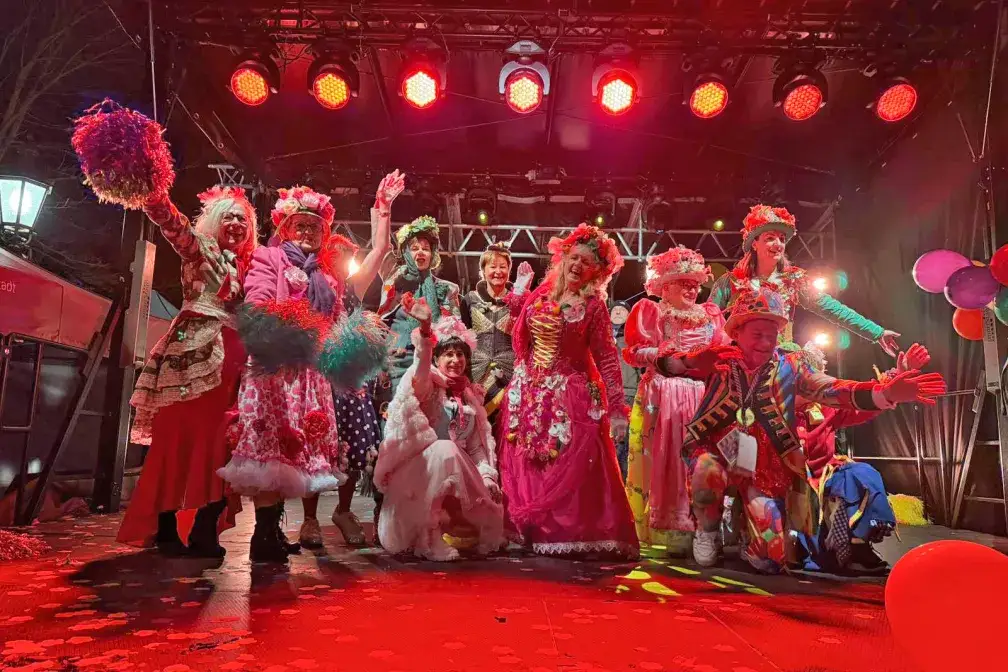
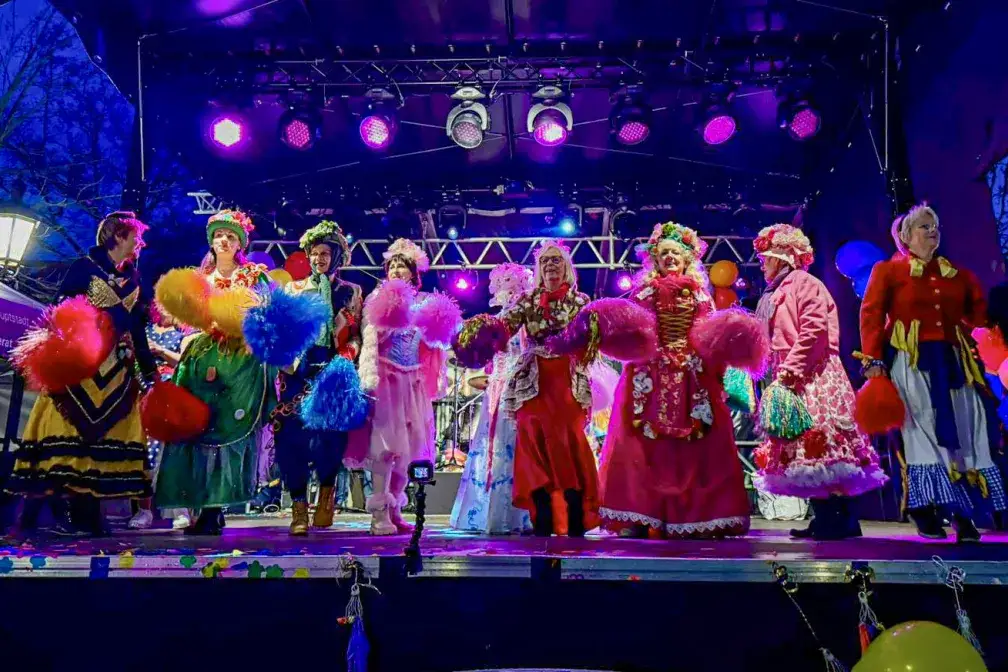
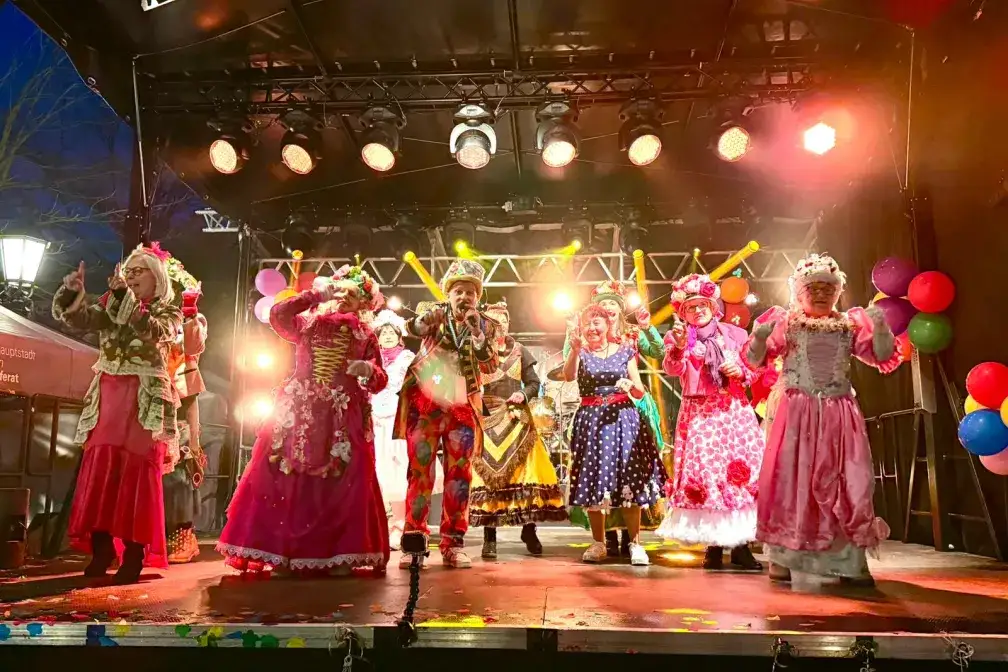
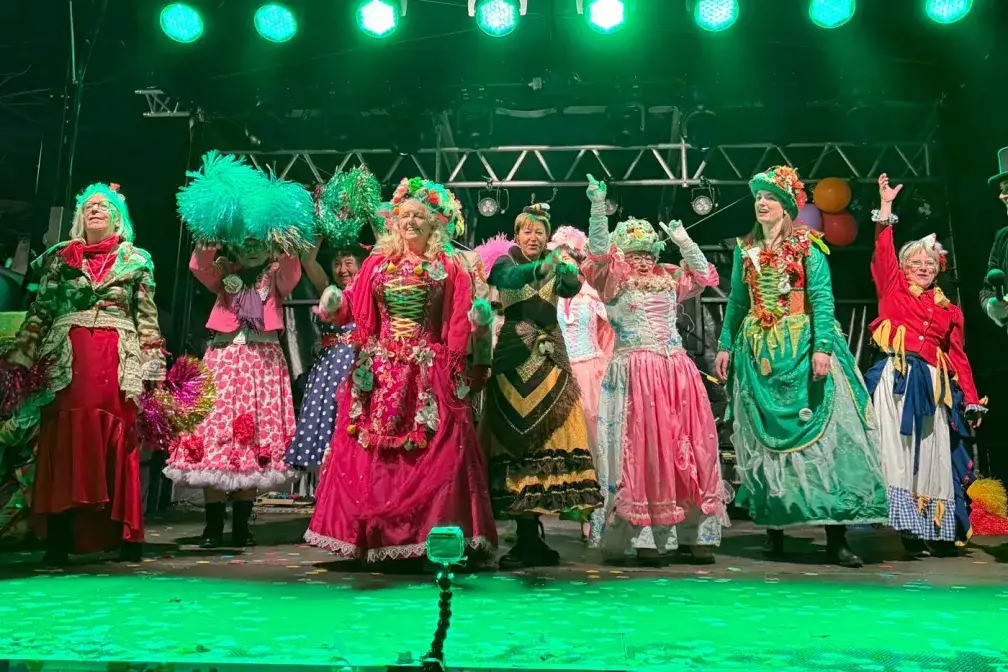
The market women's dance on Shrove Tuesday, March 4, 2025, is the highlight of Munich's carnival. The market women whirl across the stage at the Viktualienmarkt in their colorful costumes. Traditionally, the market women start their program at around 11 a.m. with the classic song "Linie 8" by Weiß Ferdl, followed by new dances that have been rehearsed for several months. The self-made dresses represent the stall: they are decorated in such a way that you can tell who is selling what at the market - whether baker, butcher or florist. After the dance, there is music and good cheer at the stalls on the Viktualienmarkt into the evening.
Die Marktweiber am Unsinnigen Donnerstag
Günther Jauch receives the Karl Valentin Order

The presenter and journalist Günther Jauch received the Karl Valentin Order of the Narrhalla on February 8, 2025. His friend Thomas Gottschalk gave the laudatory speech at the award ceremony as part of the Narrhalla's Grand Ball “Soiree Münchner Leben”.
Aschermittwoch: Geldbeutelwaschen am Fischbrunnen | 10.2.

Am Aschermittwoch, 10. Februar 2027, ist der Fasching vorbei, aber nicht ganz ohne Brauch. Beim Geldbeutelwaschen im Fischbrunnen am Marienplatz tunkt der Oberbürgermeister symbolisch das Stadtsäckl ins Wasser, damit nach der Faschingssause wieder Geld in die Kasse kommt. Ihr dürft eure Geldbeutel natürlich auch eintauchen. Traditionell gibt das Prinzenpaar an diesem Tag den Stadtschlüssel zurück. Danach geht’s in vielen Wirtshäusern zum Fischessen, und bald steht schon die Starkbierzeit vor der Tür.
Munich carnival societies: Narrhalla, Feringa and Würmesia

Narrhalla: The Narrhalla is the oldest carnival club in Munich, founded in 1893. It provides the official carnival prince and princess of the state capital of Munich and awards the Karl Valentin Order. The Narrhalla organizes several large carnival balls, for example in the Bayerischer Hof, and is of course also involved in Munich's street carnival.
Würmesia: The Würmesia was founded in Gräfelfing in 1949 and is also known outside the carnival season, as it provides the town gendarmerie corps with the original uniforms from 1813. The Würmesia also has its own prince and princess, a guard and even a ballet, with which it performs at various carnival events.
Feringa: The carnival society Feringa e.V. was founded in 1978 and mainly operates in the Munich area. It performs at numerous carnival parties with its own prince and princess, guard, youth show and children's guard.
Geschichte des Münchner Faschings

- Der Münchner Fasching geht auf mittelalterliche Bräuche zurück und unterscheidet sich schon im Namen vom „Karneval“ anderer Regionen: Das Wort „Fasching“ leitet sich vom mittelhochdeutschen „vaschanc“ („Fastnacht“) ab – der Nacht vor dem Fasten, in der noch einmal gefeiert wurde.
- Seine Wurzeln hat der Münchner Fasching in den Waffentänzen und Ritterspielen des Mittelalters; erste Belege stammen aus dem 15. Jahrhundert. Besonders im 19. Jahrhundert erlebte er eine Blütezeit mit Künstlerfesten, Maskenbällen und Umzügen, geprägt von der Schwabinger Bohème. Künstler wie Franz von Lenbach oder August Kaulbach machten die „Allotria“-Feste zu gesellschaftlichen Ereignissen.
- 1893 wurde mit der Narrhalla die erste Faschingsgesellschaft Münchens gegründet – sie brachte das organisierte Faschingstreiben an die Isar. Bis heute stellt sie das offizielle Prinzenpaar, das symbolisch den Stadtschlüssel erhält.
- Zu den festen Traditionen zählt seit Jahrzehnten der Tanz der Marktweiber auf dem Viktualienmarkt: Er entstand aus spontanen Einfällen der Marktfrauen im frühen 20. Jahrhundert, die am Faschingsdienstag zwischen ihren Ständen zu tanzen begannen. Nach dem Zweiten Weltkrieg wurde der Brauch 1950 erstmals offiziell aufgeführt und entwickelte sich zu einem Publikumsmagneten. Seit den 1980er-Jahren treten die Marktweiber auf einer Bühne auf – unterstützt von der Narrhalla und dem Prinzenpaar.
- Jüngeren Datums ist der Faschingsumzug, der 2006 vom Verein der Damischen Ritter wiederbelebt wurde und an die frühere Tradition der Umzüge anknüpft.
- Am Aschermittwoch endet der Fasching mit dem traditionellen „Geldbeutelwaschen“ im Fischbrunnen – ein Ritual, das Glück und neue Einnahmen bringen soll, bevor die München in die Fasten- und Starkbierzeit übergeht.
FAQ zum Fasching in München 2027
Wann beginnt der Fasching 2027 in München?
Der Münchner Fasching beginnt am 11. November 2026 um 11:11 Uhr mit der Vorstellung des neuen Prinzenpaares am Viktualienmarkt. Richtig los geht es mit der Inthronisation am 5. Januar 2027 auf dem Marienplatz.
Wann sind Faschingsdienstag, Rosenmontag und Aschermittwoch 2027?
Rosenmontag ist am 8. Februar, Faschingsdienstag am 9. Februar und Aschermittwoch am 10. Februar 2027. Die Faschingssaison ist damit diesmal besonders kurz.
Wann ist der Faschingsumzug 2027 in München?
Der Faschingszug der Damischen Ritter startet am Sonntag, 31. Januar 2027, um 13:13 Uhr am Isartor. Er zieht über das Rosental in die Kaufinger Straße, danach gibt es Bühnenprogramm am Marienplatz.
Wann ist München narrisch 2027?
Der Straßenfasching „München narrisch“ ist von Faschingssonntag, 7. Februar, bis Faschingsdienstag, 9. Februar 2027, geplant. Gefeiert wird in der Fußgängerzone mit Bühnen am Marienplatz und am Stachus.
Wann ist der Tanz der Marktweiber 2027?
Der Tanz der Marktweiber ist für Faschingsdienstag, 9. Februar 2027, um 11 Uhr auf dem Viktualienmarkt geplant. Er gilt als krönender Abschluss des Münchner Faschings.
Wer ist das Münchner Faschingsprinzenpaar 2027?
Das neue Offizielle Faschingsprinzenpaar der Landeshauptstadt stellt die Narrhalla am 11. November 2026 am Viktualienmarkt vor. Bis dahin bleiben die Namen geheim.
Kostet der Straßenfasching in München Eintritt?
Nein, München narrisch, der Tanz der Marktweiber, der Faschingszug und die Inthronisation sind kostenlos. Für Faschingsbälle und Partys braucht ihr Tickets.
Wo gibt es in München die besten Faschingsbälle?
Die klassischen Ballhochburgen sind das Deutsche Theater, das Hotel Bayerischer Hof und der Löwenbräukeller. Die Ballsaison im Deutschen Theater läuft vom 15. Januar bis Rosenmontag, 8. Februar 2027.
Was ist der Unsinnige Donnerstag?
Der Unsinnige Donnerstag ist der Donnerstag vor dem Faschingswochenende, 2027 der 4. Februar. Anderswo heißt er Weiberfastnacht. In München startet an diesem Tag der Wirtshausfasching, unter anderem mit dem Schlagerfasching der Narrhalla.
Wo können Kinder in München Fasching feiern?
Ein Klassiker ist der Familienfaschingsball „Pumuckl und der Faschingsprinz“ der Narrhalla am 17. Januar 2027 im Bayerischen Hof. Auch beim Faschingszug und bei München narrisch sind Kinder in Kostüm gern gesehen.
Was ist der Unterschied zwischen Fasching und Karneval?
Es ist dasselbe Fest, nur mit anderem Namen. „Fasching“ ist die süddeutsche, ursprünglich bairisch-österreichische Bezeichnung und leitet sich vom mittelhochdeutschen „vaschanc“ für Fastnacht ab. Im Rheinland spricht man von Karneval.
Was passiert am Aschermittwoch in München?
Am Aschermittwoch, 10. Februar 2027, endet der Fasching mit dem Geldbeutelwaschen im Fischbrunnen am Marienplatz. Oberbürgermeister Dominik Krause wäscht dabei symbolisch das Stadtsäckel, und das Prinzenpaar gibt den Stadtschlüssel zurück.
Wann sind die Faschingsferien 2027 in Bayern?
Die Faschingsferien in Bayern sind von Montag, 8. Februar, bis Freitag, 12. Februar 2027.
Tanzen 2027 wieder die Schäffler?
Nein, die Münchner Schäffler tanzen nur alle sieben Jahre. Ihr nächster Auftritt ist in der Faschingssaison 2033.
Faschingstermine 2027 für München
1 - 4 of 4 events
-
until
-
until
Inthronisation des Faschingsprinzenpaares
-
Marienplatz in München
-
until
-
until