
All info about the Oktoberfest in Munich
Oktoberfest in Munich from 18 September to 3 October 2027
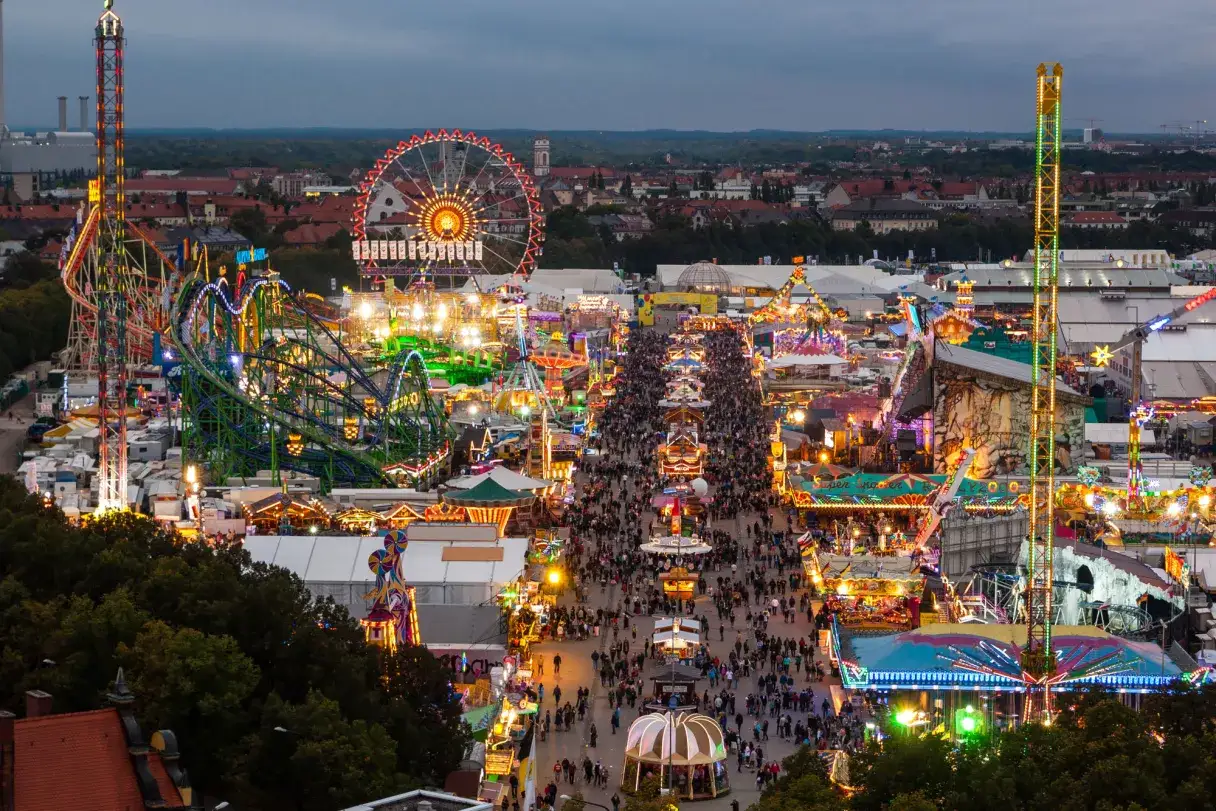
The 192st Oktoberfest takes place at Munich's Theresienwiese from September 18 to October 3, 2027. Here you find the most important information about the world's largest funfair.
More actions
Key facts about Oktoberfest at a glance
- 📅 When? Saturday 18 September to Sunday 3 October 2027
- 📍 Where? Theresienwiese in Munich
- 🎟️ Admission: The festival grounds and marquees are free to enter. There is an admission charge for the Oide Wiesn.
- 🍺 First tap: Saturday 18 September at 12 noon in the Schottenhamel tent
- 🚇 Getting there: Best by underground, S-Bahn or on foot; there are no visitor car parks directly at the Theresienwiese.
- 🎒 Bags: Bags and rucksacks up to a maximum of 3 litres and measuring 20 × 15 × 10 centimetres are permitted.
- 👨👩👧👦 Family Day: On Tuesdays, reduced prices apply at many rides and stalls until 7 pm.
- ♿ Accessibility: The large festival tents, toilets and walkways offer accessible entry and facilities.


Festival tents, fairground rides and the Oide Wiesn

Anyone heading to the Wiesn usually starts by looking for the right tent or a specific attraction. Large festival tents with bands, beer gardens and thousands of seats dominate the scene. Alongside these are smaller tents, stalls and fairground rides – ranging from family favourites to a quick spin offering views over the festival grounds.
Things are a bit quieter at the Oidn Wiesn. Historic fairground rides, traditional tents, folk dancing and brass band music evoke the spirit of earlier Oktoberfests. It’s well worth a visit for families, lovers of Bavarian tradition or anyone looking to escape the hustle and bustle for a while.
👉 The 2027 Oktoberfest will take place from 18 September to 3 October at the Theresienwiese, bringing together large and small festival tents, more than 100 fairground rides and stalls, as well as the historic Oide Wiesn.
Fest tents at the Oktoberfest
In 2027, there are 17 large and 21 small fest tents on the Wiesn. Each has its own character: some are known for brass band music and tradition, others for their evening atmosphere or a particular crowd. In the tent profiles, you can find out which beer is served, how many seats a tent has and what to expect there.
Table reservations are handled directly by the festival tents. A reservation isn’t strictly necessary: there are also areas in the tents and beer gardens where no reservation is required. However, on evenings, at weekends and on public holidays, entry may be temporarily closed.
The Oide Wiesn
The "Oide Wiesn" is situated in the southern part of the Theresienwiese. There, historic carousels spin, bands play traditional music, and the tents focus more on folk music and dancing. In 2026, adults payed a 4-euro entrance fee; children up to the age of 14 can visit the Oide Wiesn free of charge.
Site map for the Wiesn
The site map helps you find your way through the hustle and bustle of the Wiesn. Use it to locate festival tents, fairground rides, cash machines, toilets, luggage storage, taxi ranks and other service points. This saves time, especially when you’re there – and sometimes spares you a long search between Feststraße and Wirtsbudenstraße.
Programme and key dates for the 2027 Oktoberfest
The tapping of the first barrel marks the start of the Wiesn, but the programme is by no means limited to that. Parades wind their way through the city, bands play at the Bavaria statue, and the festivities conclude with a fireworks display. Anyone wishing to experience one of these days in particular should plan their journey well in advance: the city centre and public transport get very busy, especially around the time of the major parades.
👉 The key Wiesn dates for 2027 range from the arrival of the Wiesn landlords and the tapping of the first barrel on 19 September to the firing of the celebratory cannons at the Bavaria statue on 4 October.
Saturday, 18 September: Procession and tapping of the first barrel
In the morning, festival landlords, breweries, brass bands and decorated horse-drawn carriages make their way to the Theresienwiese. At 12 noon, the Mayor of Munich taps the first barrel of festival beer at Schottenhamel. With the cry of “O’zapft is!”, beer is served in the festival tents.
Sunday, 19 September: Traditional costume and marksmen’s parade
People in traditional costume, marksmen’s clubs, brass bands and parade floats make their way through Munich city centre on the first Sunday of the Wiesn. The parade brings tradition to the streets – and draws large crowds of spectators to the roadside.
Thursday, 23 September: Oktoberfest Church Service at the Marstall
In the Marstall marquee, fairground operators and pub landlords celebrate the traditional ecumenical Oktoberfest church service. Visitors are also welcome to attend. The service provides an opportunity for baptisms and for remembering the deceased.
Sunday, 26 September: Open-air concert by the Wiesn landlords
On the second Sunday of the Wiesn, the bands from the festival tents play together on the steps below the Bavaria statue. Bavarian brass music, marches and modern pieces are performed against a backdrop that’s perfect for a quick break away from the festival tents.
Sunday, 3 October: Gun salutes at the Bavaria statue
Around 60 gun saluters bid farewell to the Oktoberfest on the last day of the festival at the foot of the Bavaria statue. The midday salutes are loud, but they do not mark the end of the festivities: the celebrations continue until the evening.
Tuesday 21 September and Tuesday 28 September: Family Days
On both Wiesn Tuesdays, reduced prices for children apply at many rides and stalls until 7 pm. Some festival tents also offer special deals for families.


Info for visitors and press: Opening hours and more
Date:
Oktoberfest is held annually from the Saturday after September 15 to the first Sunday in October. If October 1 or 2 is a Sunday, Oktoberfest is extended up to and including October 3 (a public holiday in Germany).
Opening hours:
- Beer is served in the big festival tents until 10:30 p.m. in the small tents until 11 p.m. — closing everywhere at 11:30 p.m. (Käfer Wies'n-Schänke and Kufflers Weinzelt: Beer serving until 0:30 a.m. — closing at 1 a.m.).
- The stalls and rides open at 12 a.m. until 12 p.m. on inauguration day, at 10 a.m. until 11:30 p.m. from monday to thursday, at 10 a.m. until midnight on fridays and monday, 2. October, at 9 a.m. until 12 p.m. on saturdays and at 9 a.m. until 11:30 p.m. on sundays.
- The historic Oktoberfest "Oide Wiesn" is open daily from 10 a.m. until 11:30 p.m.
- Special times on Opening Day (Beer is served from 12 a.m.)


History of the Oktoberfest
- 1810: Crown Prince Ludwig (who later became King Ludwig I), married Princess Therese of Saxony-Hildburghausen on 12th October 1810. The citizens of Munich were invited to attend the festivities held on the fields in front of the city gates. Horse races in the presence of the Royal Family marked the close of the event that was celebrated as a festival for the whole of Bavaria. The decision to repeat the horse races in the subsequent year gave rise to the tradition of the Oktoberfest.
- 1818: the first carousel and two swings were set up
- 1896: beer stands were replaced by the first beer tents and halls
- 1950: The Oktoberfest is opened for the first time with the tapping of the barrel in the Schottenhamel tent by the mayor.
- 2010: For the first time, the historic Oktoberfest ("Oide Wiesn") takes place at the south end of the Theresienwiese with historic rides, festival tents and other attractions.


